
August 19, 2026
A Building Manager's Guide to Planned Shutdown Maintenance in Industrial Facilities
A shutdown window is the only time certain maintenance can happen without disrupting production. Poor planning wastes that window, here's how to actually use it.
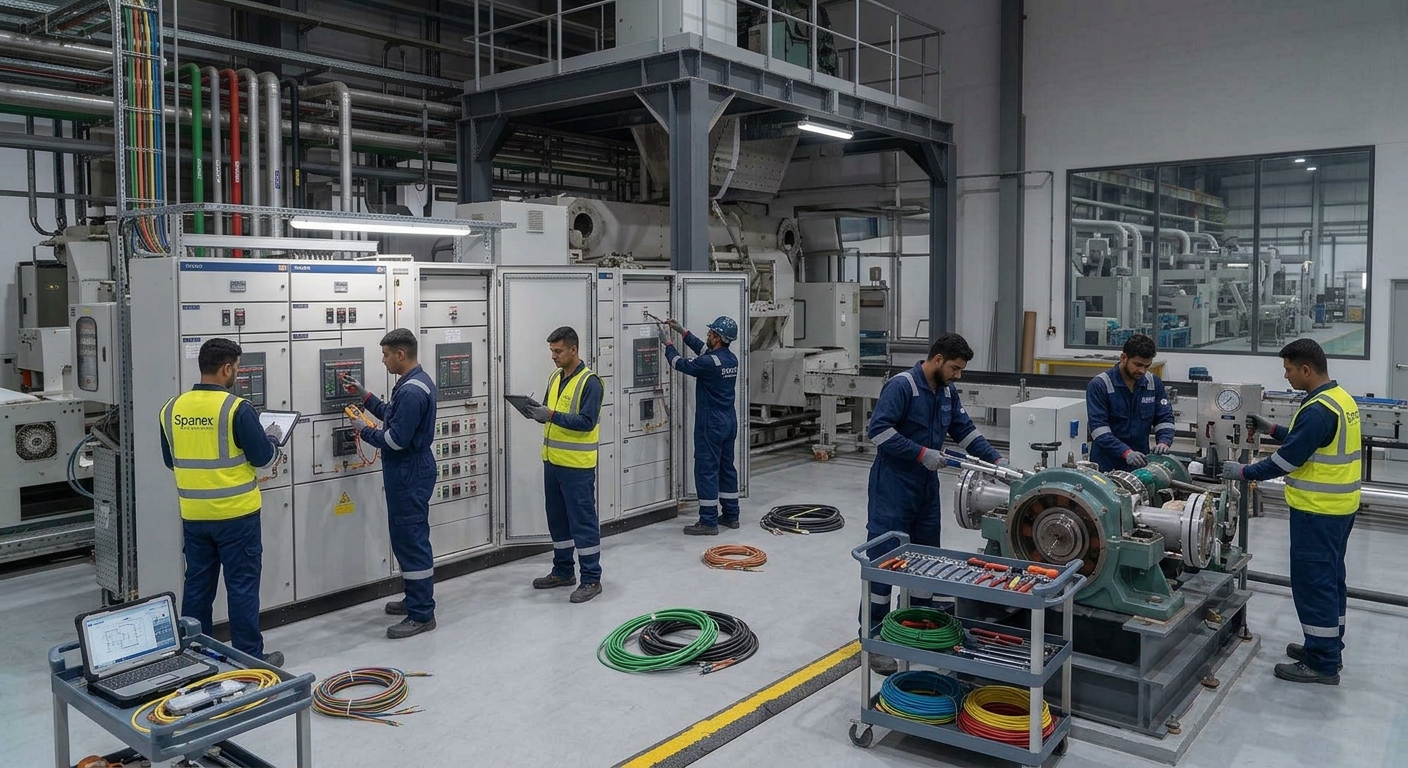
A Building Manager's Guide to Planned Shutdown Maintenance in Industrial Facilities
A production shutdown is expensive time. Every hour a facility isn't running is an hour of lost output, which means the maintenance packed into that window needs to be planned with the same discipline as the production schedule around it, not treated as a general catch-up period for whatever's been deferred.
Why shutdown maintenance is different from routine servicing
Certain work simply can't happen while a facility is operating. Electrical isolation for panel upgrades, structural inspection of equipment under load, deep cleaning of systems that run continuously, all of it requires downtime that a business can't offer on a random Tuesday. A planned shutdown is the only legitimate window for this category of work, which makes wasting it far more costly than a missed routine service.
The pressure this creates is real. Every day added to a shutdown is a day of lost production, but every task skipped because there wasn't time is a task that waits until the next shutdown, sometimes months away, to get addressed.
What actually causes shutdown overruns
Scope discovered too late. Issues found only once equipment is opened up, rather than flagged during a pre-shutdown inspection, force decisions mid-shutdown about whether to expand scope or defer the fix, both of which cost time.
Sequencing that isn't planned around dependencies. Electrical isolation has to happen before certain mechanical work can start safely. If the sequence isn't mapped in advance, contractors end up waiting on each other instead of working in parallel where possible.
Multiple contractors coordinating separately. When electrical, mechanical, and structural work are handled by different companies, each with their own schedule and site access needs, coordination overhead alone can eat into the shutdown window before any actual work happens.
What proper shutdown planning looks like
A pre-shutdown inspection, conducted while the facility is still running, identifies as much of the scope as possible before the shutdown starts, rather than discovering it once equipment is already open. This is where most avoidable overruns get prevented.
A sequenced work plan maps out what needs to happen in what order, accounting for which tasks depend on others being completed first, and which can run in parallel across different teams.
A single point of coordination matters when multiple trades are involved. Spanex handles electrical, mechanical, and structural works in-house, which means the shutdown schedule is built as one sequenced plan rather than three separate contractors each managing their own piece and hoping the handoffs line up.
Building in contingency without extending the shutdown
Even well-planned shutdowns uncover surprises once equipment is opened. The way to handle this isn't padding the whole schedule with slack, it's identifying which tasks have flexibility and which don't during the planning stage, so an unexpected finding in one area doesn't stall the entire shutdown while a decision gets made.
Documentation that carries into the next shutdown
A shutdown is also the best opportunity to properly document equipment condition, since access exists that won't be available again until the next planned window. That documentation, done consistently, makes the next shutdown's pre-inspection faster and more accurate, since there's a record of what was found and fixed last time, not just institutional memory.
Planning your next shutdown
If your facility has a shutdown window coming up, the planning conversation is worth starting well before the date, not the week of. A pre-shutdown site assessment can identify likely scope in advance and give a realistic estimate of what the window can actually cover.
Book a shutdown planning consultation and we'll help build a sequenced plan before your window opens, not during it.
Spanex Technical Services supports planned shutdown maintenance across industrial and commercial facilities in Dubai and Sharjah, with electrical, mechanical, and structural trades coordinated in-house.