
August 14, 2026
Waterproofing Basics for Dubai Roofs and Terraces Before Summer Heat Hits
Waterproofing failures rarely show up in summer, they show up the following rainy season, after months of heat have already cracked the membrane. Here's when and why to check it.
Waterproofing Basics for Dubai Roofs and Terraces Before Summer Heat Hits
Waterproofing is one of those jobs nobody thinks about until it fails, and by the time it fails, the damage is already inside the building. A cracked membrane doesn't leak the day it cracks. It leaks weeks or months later, during the next heavy rain, when water finally finds its way through.
Why UAE summers are especially hard on waterproofing membranes
Most waterproofing systems degrade from thermal cycling more than from water exposure itself. A roof surface in Dubai can swing from below 30°C at night to well over 60°C in direct summer sun. That daily expansion and contraction stresses the membrane, and over several summers, it cracks, blisters, or separates from the surface beneath it, long before any visible leak appears.
Flat roofs and terraces are hit hardest, since they hold direct sun exposure all day with no shade or slope to disperse heat. Villa roofs, terrace apartments, and podium decks over parking or retail areas are the most common failure points.
Signs the membrane is already failing
Bubbling or blistering on the roof surface, usually a sign trapped moisture is expanding under heat Hairline cracks around drains, upstands, or where the roof meets a parapet wall, these joints move more than flat sections and fail first Ponding water that takes longer than 24 to 48 hours to drain after rain, which suggests the slope or drainage has shifted Any staining on the ceiling below a roof or terrace, even faint, since that's usually evidence water has already gotten through
None of these mean immediate flooding. They mean the membrane has started failing and the clock is running until the next serious rain finds the weak point.
Why checking before summer, not after, actually matters
Waterproofing repairs need dry conditions and enough working time for the membrane to cure properly before it's exposed to rain or foot traffic. Doing this work in spring, before peak heat and before the rainy season returns, gives the repair time to cure under manageable conditions rather than rushing it after a leak has already appeared.
Waiting until a leak shows up means repairing under pressure, often with water damage to fix at the same time, and no buffer if the fix needs a second coat or additional curing time.
What proper waterproofing work involves
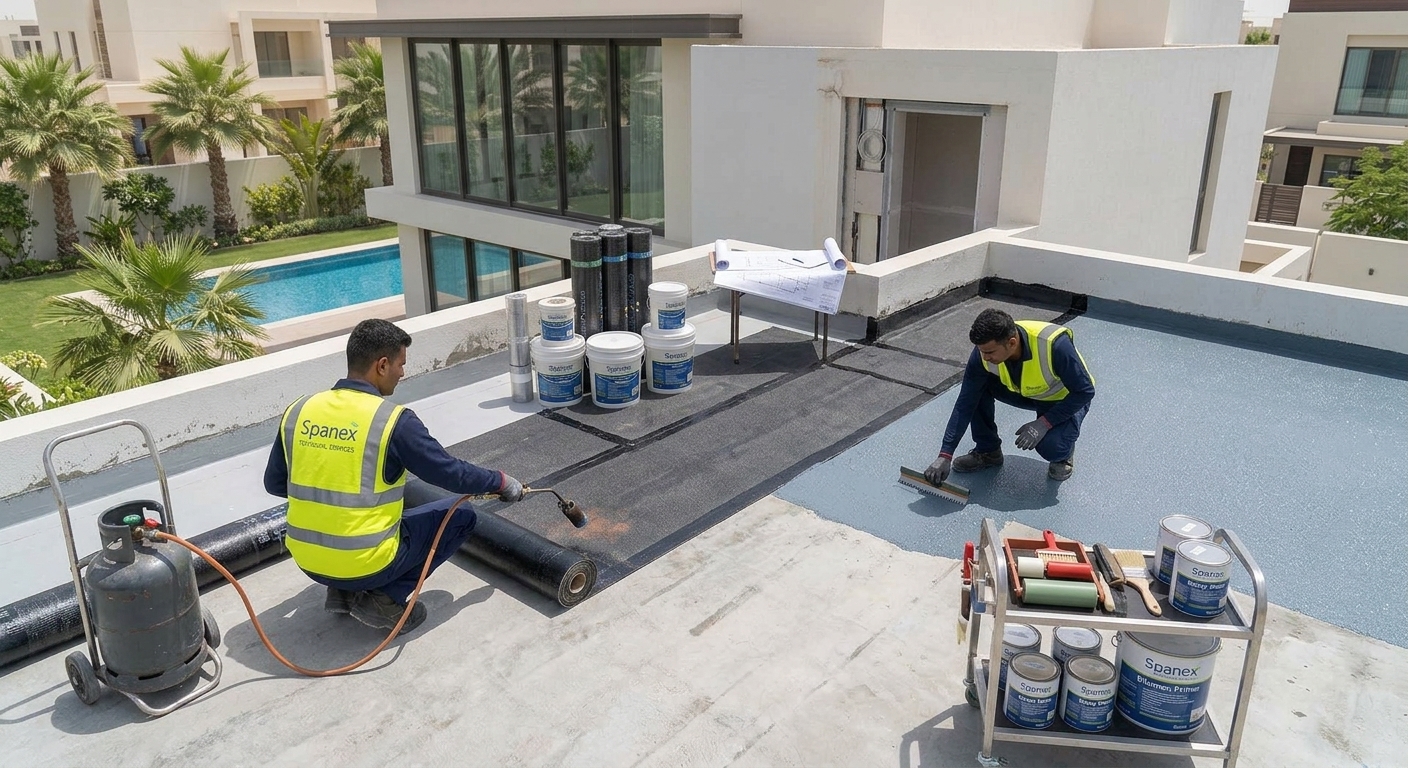
Surface preparation matters more than the membrane product itself. A membrane applied over a cracked, dirty, or poorly prepped surface fails faster regardless of quality. Spanex's waterproofing services start with a full surface assessment, identifying not just visible cracks but weak points at drains, joints, and parapet walls where failures typically start.
For villas and buildings already showing ceiling stains, waterproofing often overlaps with ceiling works and sometimes painting, since existing water damage needs repair alongside the membrane fix. Handling that as one scope avoids the same multi-contractor handoff problem that comes up with any water damage repair.
Before the next rainy season
If your roof, terrace, or podium deck hasn't been inspected in the last two to three years, it's worth checking now, while conditions are dry and there's time to do the work properly rather than reactively.
Book a free roof inspection and we'll tell you honestly whether the membrane needs attention or has more life left in it. Spanex Technical Services delivers waterproofing across villas, terraces, and commercial roofs in Dubai and Sharjah, alongside ceiling and painting works in-house.