
August 12, 2026
Retail Fit-Out in Dubai's Malls: Timelines, Permits, and What Trips Up First-Timers
Mall fit-outs run on tighter rules and tighter clocks than standalone retail. Here's what first-time tenants usually get wrong, and how to avoid losing weeks to it.
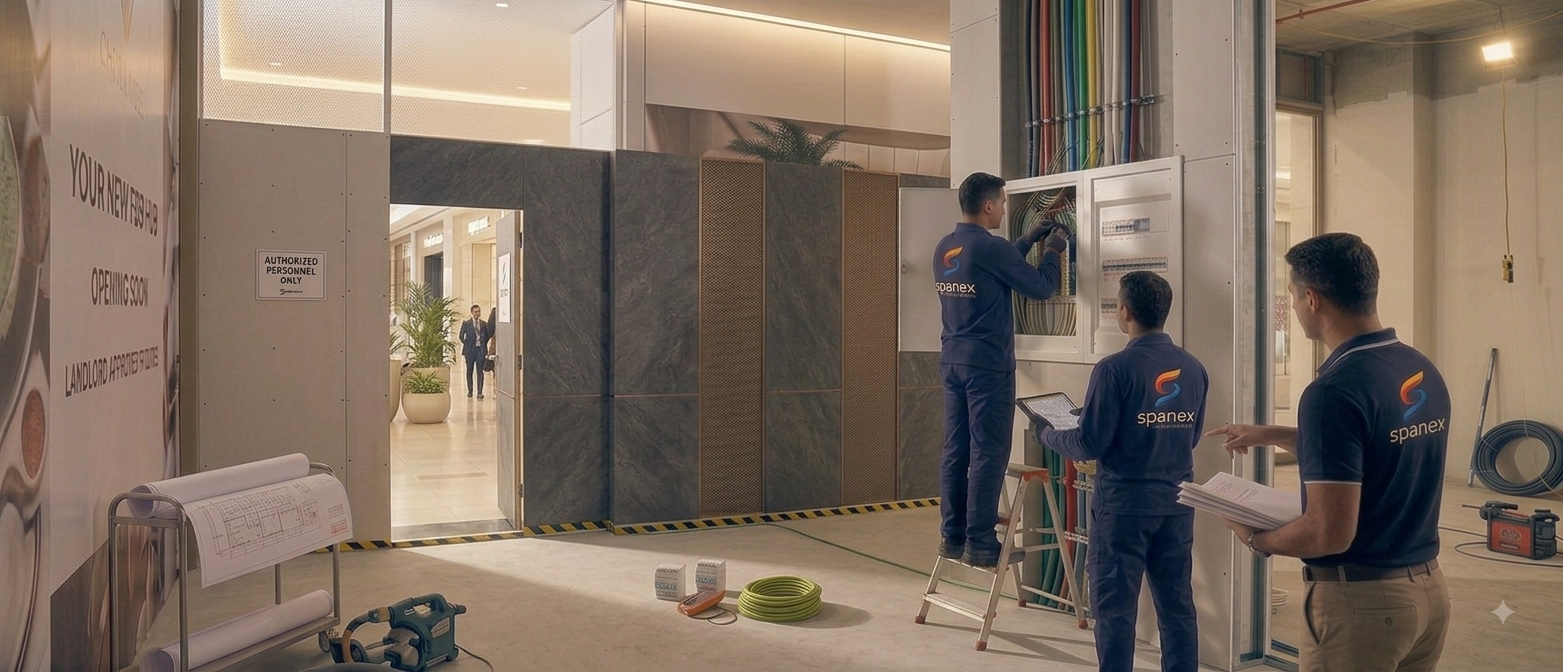
Signing a mall lease feels like the hard part is over. For a first-time tenant, the fit-out that follows is often where the real delays show up, not because the construction work is complicated, but because mall fit-outs run on a different set of rules than a standalone shop or office.
What makes mall fit-outs different
Every mall in Dubai has its own landlord fit-out guidelines, separate from Dubai Municipality or Civil Defense requirements. These typically cover:
Working hours (many malls only allow loud or dusty work overnight or before opening hours) Contractor accreditation (the mall often maintains an approved contractor list, or requires insurance and safety documentation before granting site access) Material and finish restrictions (shopfront design, signage, and even flooring materials may need landlord approval, not just a building permit) Delivery and loading dock scheduling, since malls control access tightly during trading hours
A contractor unfamiliar with a specific mall's process can lose days just getting site access approved, before any actual construction starts.
Where first-timers lose the most time
Submitting design drawings without landlord sign-off first. Municipality approval and mall approval are two separate steps, and skipping the mall's design review means redoing drawings after they're already submitted elsewhere.
Underestimating MEP coordination. Retail units often need electrical load increases, additional AC capacity, and sometimes plumbing for F&B units, all of which need to route through both DEWA and the mall's own MEP team. This is usually the single biggest source of delay in a mall fit-out.
Assuming a general contractor can handle mall-specific compliance. A contractor with no mall fit-out history spends the first week learning the landlord's process instead of working. That week comes straight off the rent-free fit-out period most leases include.
A realistic timeline, done properly
A typical F&B or retail fit-out in a major Dubai mall runs from initial design submission to opening in roughly 8 to 14 weeks, depending on unit size and MEP complexity. The breakdown usually looks like this:
Design and landlord approval, 2 to 3 weeks Municipality and Civil Defence permits, 2 to 4 weeks, often running in parallel with landlord approval Construction and MEP works, 4 to 6 weeks Snagging and final inspection, 1 to 2 weeks
Tenants who lose time almost always lose it in the approval stages, not the construction itself.
Why this matters for your rent-free period
Most mall leases include a fixed fit-out period before rent starts. Every week lost to approval delays or MEP rework is a week of that period spent on paperwork instead of building out the unit, and once it expires, rent starts whether the shop is open or not.
Spanex handles fit-out works alongside electrical, plumbing, and HVAC in-house, which means MEP scope gets planned against the mall's requirements from the design stage, not discovered mid-construction. For tenants who've fit out in a specific mall before, that familiarity with the landlord's process is often what keeps a project on the 8 to 14 week end of the range instead of running long.
Before you sign your fit-out contractor
Ask any contractor you're considering whether they've worked in your specific mall before, and ask them to walk you through that mall's landlord approval process specifically, not a generic one. If they can't, that's the first delay waiting to happen.
Book a free consultation and we'll give you a realistic timeline for your specific unit and mall before you commit to a fit-out schedule.
Spanex Technical Services delivers fit-out projects across Dubai and Sharjah malls and retail developments, with electrical, plumbing, and HVAC handled in-house under one scope.