
August 8, 2026
DEWA Compliant Electrical-What Every Landlord Should Know Before Renovating
Skipping DEWA approval on electrical work during a renovation can mean a failed inspection, a fine, or worse a fire risk hidden behind new paint. Here's what landlords need to get right.
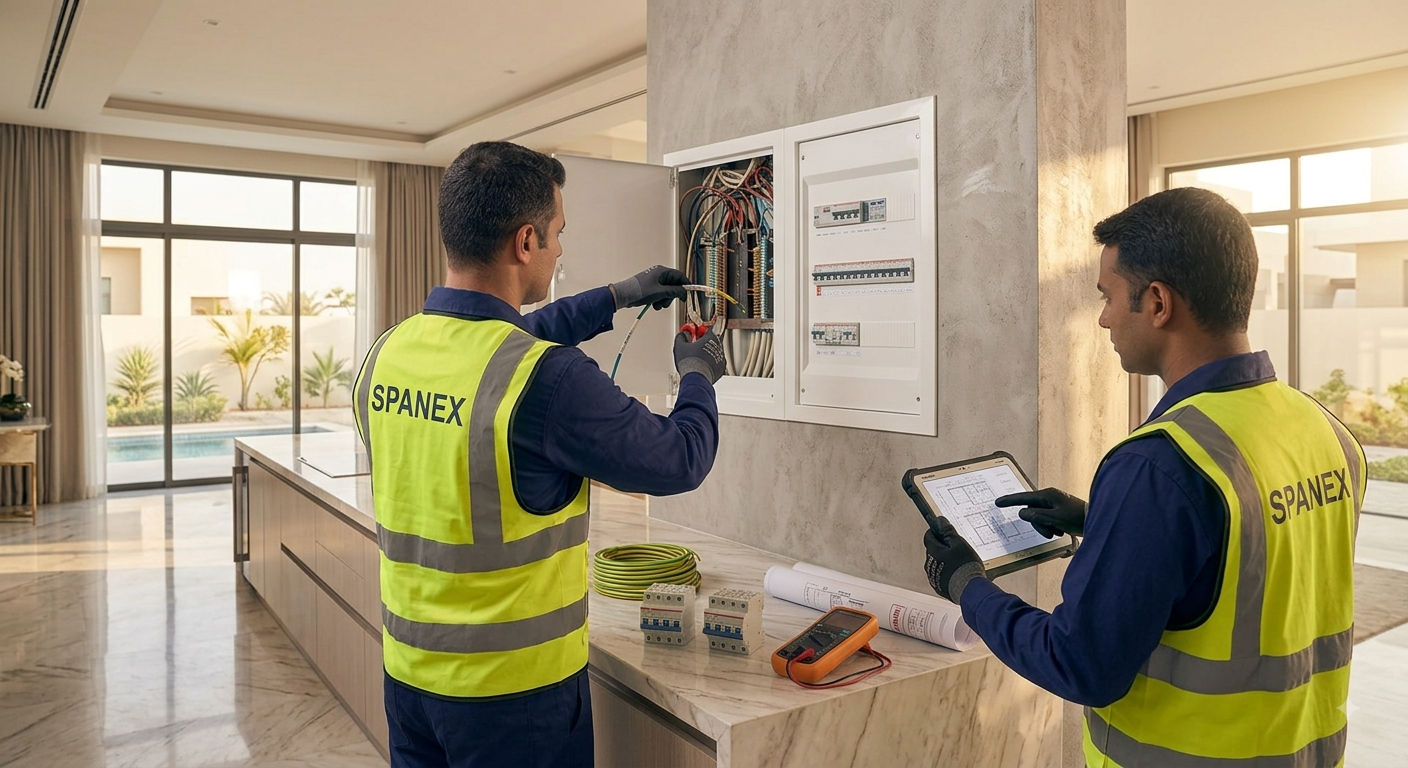
DEWA-Compliant Electrical What Every Landlord Should Know Before Renovating
Renovation timelines in Dubai usually revolve around the visible work, including flooring, paint, and fit-out. Electrical often gets treated as something to "sort out along the way," especially if it is just adding a few points or moving a distribution board slightly. That is where most compliance problems start.
Any electrical alteration in Dubai, such as new circuits, DB relocation, load changes, or additional points, falls under DEWA regulations. Unpermitted work does not just risk a fine. It risks a failed inspection that stalls handover, or worse, a wiring fault sealed behind new gypsum and paint that nobody finds until it is a safety issue.
What actually needs approval
Landlords are often surprised by how much falls under DEWA's scope:
- Any new circuit or additional load, including extra AC units, additional sockets in a converted room, or a new kitchen island with its own points. - DB (distribution board) relocation or upgrade, which is common in villa renovations where a layout changes. - Load increases, such as adding equipment that pushes a property's electrical demand above what the original connection was sized for. - Any work touching the meter or main supply connection.
Cosmetic electrical changes, like swapping a light fitting for an identical load, are more routine. But anything that changes circuits, loads, or the DB itself needs to go through proper approval, with as-built drawings matching what is actually installed.
Where landlords get caught out
- Using an unlicensed electrician for "quick" work. It is often cheaper upfront and faster to book. The risk shows up later at inspection, at resale, or when an insurance claim gets denied because the work was not permitted or documented. - Skipping updated as-built drawings. If the DB was moved or circuits changed during renovation but the drawings were not updated, the property's electrical documentation no longer matches reality. That mismatch surfaces at the worst times, including during a sale, a new tenant's fit-out, or a DEWA inspection. - Underestimating load before adding AC or appliances. A villa renovation that adds a second kitchen, a home gym, or additional AC units can push total load past what the existing connection supports. That is not just a compliance issue; it is a fire risk if the existing supply is forced to carry more than it is rated for.
What compliant work actually involves
At Spanex, electrical works on any renovation start with a load assessment, confirming what the property can currently support and what the planned changes will require, before anything is installed. Work is carried out to DEWA standards with proper documentation. Where the DB or load requires it, submissions are made through the correct approval channel rather than treated as an afterthought.
Because electrical sits alongside fit-out, plumbing, and ceiling works under one contractor, load changes get planned against the rest of the renovation from day one. This prevents an electrician from arriving mid-project to find the layout already built around assumptions nobody checked.
Before your renovation starts
If you are planning a villa renovation, a fit-out, or even adding a few AC units to an existing property, it is worth getting a load assessment before finalizing the design, not after.
Book a free site visit and we will tell you honestly what your renovation plan means for the electrical scope, before you are committed to a layout.