
August 1, 2026
Ceiling Leak? Here's Why It's Rarely "Just" a Plumbing Job
A water stain on the ceiling looks like a plumbing problem. By the time it's fixed properly, it's usually plumbing, gypsum, and painting and that's exactly where most contractors start passing the blame.
Ceiling Leak? Here's Why It's Rarely "Just" a Plumbing Job
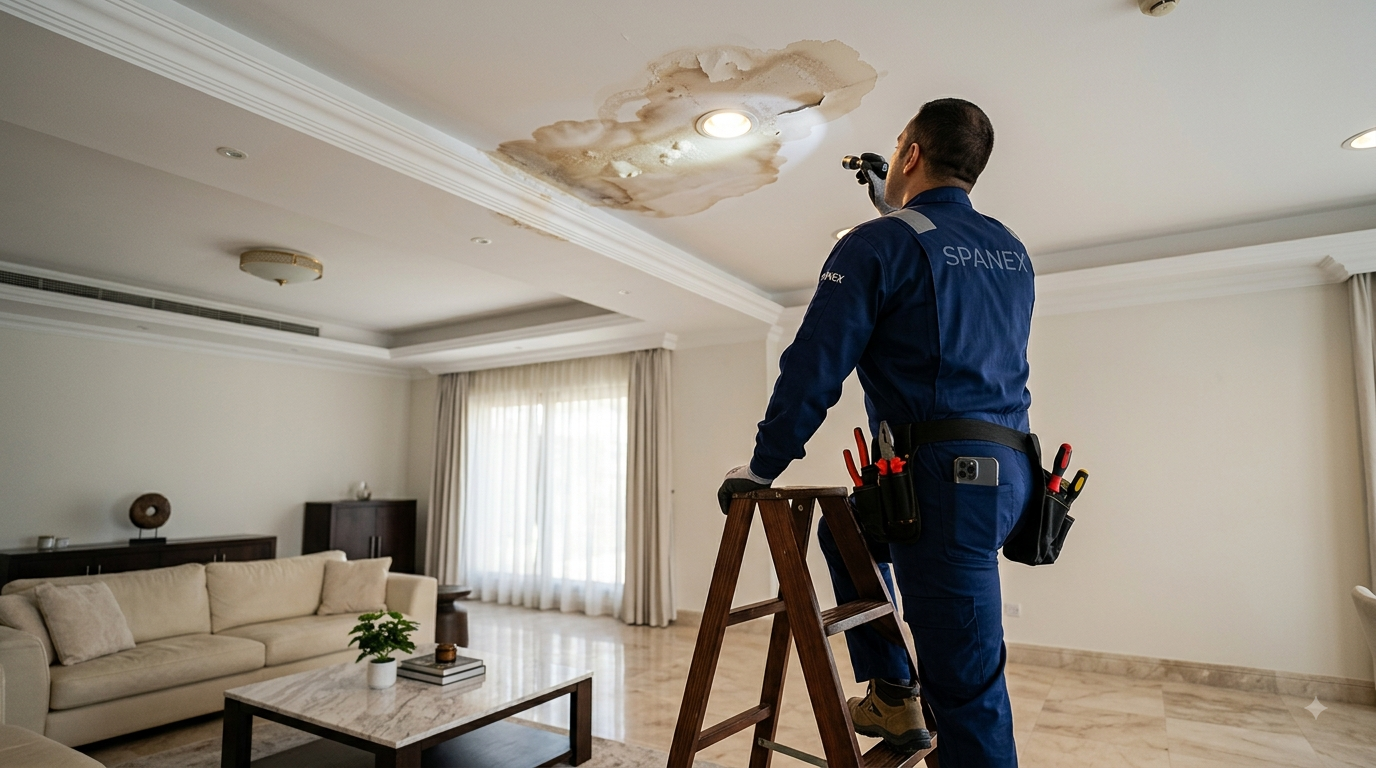
A brown stain spreads across the ceiling. The obvious move is to call a plumber. They find the leak, fix the pipe, and leave job done, from their point of view.
Except the ceiling is still stained. The gypsum board underneath has absorbed water and started to sag. The paint above it has bubbled. None of that was in the plumber's scope, so now you're calling a second contractor for the ceiling repair, and a third for repainting and each one wants to inspect the site fresh, quote separately, and schedule around their own availability.
This is the single most common way a small maintenance issue turns into a two-week, three-invoice ordeal.
Why it happens with almost every leak
Water damage in a UAE building rarely stays in one trade's territory:
The source is plumbing a joint, a pipe, a pump, or a water tank overflow. The damage is usually gypsum or ceiling material waterlogged board that's lost structural integrity and needs replacing, not just drying out. The finish is painting matching texture and colour on a patched section so it doesn't look patched. Sometimes electrical if the leak sits near wiring or a light fitting, it needs checking before anyone touches the ceiling, for safety as much as compliance.
A single-trade contractor fixes their piece and stops. That's not negligence it's literally outside what they're contracted and insured to do. But it leaves the property owner managing the handoffs, re-explaining the problem to each new crew, and absorbing the delay between one contractor finishing and the next one starting.
What "one team" actually looks like in practice
When Spanex attends a ceiling leak, the same visit that identifies the plumbing fault also assesses the ceiling damage and flags whether painting will be needed because electrical works, plumbing works, ceiling works, and painting works all sit in-house, under one supervisor.
That changes three things:
One survey, not three. The same technician who traces the leak can tell you upfront what the ceiling repair will involve, instead of you waiting for a separate contractor to assess it. One schedule. The plumbing fix, the gypsum patch, and the repaint happen back to back, not whenever each contractor can next fit you in. One warranty. If the patched section fails, there's no dispute over whether it was the plumber's fault or the ceiling contractor's it's one team, one guarantee. The cost difference is real, not just convenience
Multi-trade jobs handled as separate contracts almost always cost more each contractor prices their piece independently, and gaps between visits often mean the damage spreads further before the next trade arrives (a wet ceiling left for a week develops mould, which is its own repair). Handling it as one scope, one visit at a time, tends to close out faster and cheaper than the sum of three separate call-outs.
If you've got a stain that's growing
Don't wait to see if it dries out on its own a slow leak rarely does, and the longer gypsum stays wet, the more of it needs replacing. A quick assessment tells you whether it's a same-day fix or a multi-trade job, and either way you'll get one fixed price before anything starts.
Book a free site visit or send a photo on WhatsApp most leaks we can get a first read on from a picture alone.